Monday, October 3, 2016

Week 5: Legal and ethical contexts in my digital practice

The education council recognises ethics as four fundamental principals:
  • Autonomy to treat people with rights that are to be honoured and defended
  • Justice to share power and prevent the abuse of power
  • Responsible care to do good and minimise harm to others
  • Truth to be honest with others and self.
In today's classrooms, there has been noticeable shift in the way we teach, and the way children interact with their learning. This is mostly due to the increased use of digital devices in and within learning. With this comes a new thread of ethical issues that we were not facing even 10 years ago.

In my classroom I have been undertaking a digital journey through this postgrad, and through the use of twitter as a tool to interact with whanau. As safe as we try to make our class, we have very little to no control over what happens outside of the classroom walls, in cyberspace. As a teacher, I am trusting my students to use the net responsibly, and for learning purposes only. However, the guidelines around digital interaction at my school were loose, and not something that was always discussed with students. There was an incident earlier this year where a few students in my class proceeded t google inappropriate images online. Whilst the school has certain firewalls to stop this from being possible, there are some images that are deemed ok by the firewall, and not ok by any other standards. 
This was an issue that was taken very seriously by the school and children involved were dealt with by management. This prompted the school to construct a strong and clear digital policy. There were many discussions about what was ok and what was not, with staff opinions varying, however we went back to the 4 ethical principals. We needed to create a treaty where children signed on to a certain expectation of their behavior online. 

We also moved into a google school, with all the children in my class getting their own email addresses. There was a slight ethical dilemma with how intrusive we could be with these, and how much was their private email. The children were the stakeholders in this, and we had to have discussions around how much we would be able to control their individual emails, in order to keep them safe. However because it was a tool for school, we signed on to Hapara, where I can track what students send, receive, and create.

Hapara has provided teachers with a platform to keep an eye on what children are doing online, whilst giving children the freedom to use digital tools to aid their learning.


References:


Education Council. (n.d). The Education Council Code of Ethics for Certficated Teachers. Retrieved from https://educationcouncil.org.nz/content/code-of-ethics-certificated-teachers-0
Hall, A. (2001). What ought I to do, all things considered? An approach to the exploration of ethical problems by teachers. Paper presented at the IIPE Conference, Brisbane. Retrieved from http://www.educationalleaders.govt.nz/Culture/Developing-leaders/What-Ought-I-to-Do-All-Things-Considered-An-Approach-to-the-Exploration-of-Ethical-Problems-by-Teachers

Tuesday, May 24, 2016

Week 11- Servant leadership

Today's blog post is inspired by an excerpt from Greenleafs's essay on servant leadership.

 Whilst just a small part of the essay meant a very limited insight into servant leadership, I have naturally started to compare that to the type of leadership I encounter each and every day.

One quote in particular that resonated with me was that servant leadership requires the servant part first; "then the conscious choice brings one to aspire to lead."
I love the idea that first leaders must get to know their followers, have a personal relationship with them and help them, and through that people will want to follow, and be led.

I would definitely like to aspire to be this form of leader, and at the very least to read the rest of  Greenleaf's essay!

Week 8--

Wednesday, March 23, 2016

Week 2- Towards Reconceptualising Leadership: The Implications of the Revised New Zealand Curriculum for School Leaders


Reading this piece of work was really thought provoking, albeit hard as I chose to leave it till 10:00 at night to read!

My school is in the midst of professional development in the form of "culture counts". Within 5 minutes of reading our designated paper, I was enthralled. So much of what I read I am living and breathing each and every day at work.

 In my last post I touched on how the leadership structure at my school had gone through significant changes. With this change, we have been fortunate enough to gain a Principal who embodies every characteristic of a Principal who promotes teacher leadership. It is a wonderful feeling to read about what has been researched as best practise in terms of leadership structure, and see that playing out at your School.

Quite often we feel bogged down by the amount of stress and pressure each and every day brings, but reading this paper made me feel a sense of pride, that my school is on the cusp of learning, and are looking at how we best do this to raise student achievement.
We are in the early stages, collecting voice from teachers, children, and the community, but the changes that I have seen that may seem insignificant to others, have been imperative to our school moving in the right direction, to best teach from the revised NZC.
For the first time we as teachers are being asked about how we can better our practise, our pedagogy, for the children we teach each and every day. Oh what a simple concept, however, in Education it has always been hierarchical and from the top down. How refreshing it is to be a part of a movement that sees best practise as a collaborative process.

That truly is how we will, as professionals, begin to view knowledge as a verb, and move from deficit thinking to agentic thinking.

Well that is the hope after all.....

Saturday, March 19, 2016

Week 2- How do 20th century and 21st century skills differ? Do we need both?

After watching the required video for this week, I began to ponder, what is still relevant from 20th century teaching and/or skills, and what should we be mindfully removing from our teaching practise.

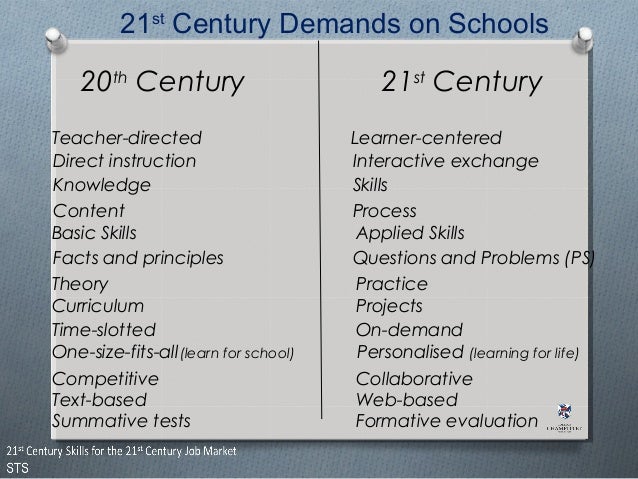
To look into this further, I began to research what the fundamental differences are between the two. I stumbled across this list:


It is quite clear to see the most obvious change is in the mindset of how teaching is approached. Gone are the days where we as teachers stand at the front, instruct our children, and they copy down work from the board. Teaching has become a much more collaborative process, one which is tailored to suit varying children's needs and interests. The goal for teaching now is to develop inquiring minds, critical thinkers, and providing an environment where children are asking questions more then giving answers.

As stated in the video, the characteristics and drivers of any natural ecosystem are that which are Permeable, Adaptive, Dynamic, Relevant, Self-correcting, and Creative. The hope today would be that all of these things would be visible and present.

Whilst I agree with all of those characteristics, I also feel that there is a way to have a healthy balance of both 20th century and 21st century skills.
I think schools are often rushing into trying to fit the 21st century 'mold' by creating these wonderful MLE environments, but without a change in teaching, these spaces prove to be redundant, and have no adverse effects on student achievement.

For us to be effective in creating these environments where we see student ownership of learning, we must first understand how to best facilitate 21st century learning, so we are growing these skills, not hindering them.


Thursday, March 17, 2016

Week 1- Reflect on what you consider a good leader to be like. Are you a thought leader, would you want to be?


A good leader...... My opinion of what a good leader is has changed somewhat over the last couple of years, as there has been significant changes in the leadership structures at my school. If I had to make a list of attributes as to what a good leader is, these would be some of the most fundamental ones (in my very humble opinion!)

A good leader:

  • is attentive; listens to the needs and issues that others have
  • is reflective; consistently reflects on their pedagogy, how they work, and how to best lead others
  • is reliable; a good leader is someone who can be relied upon. 
  • is professional; someone you know you can talk to in a professional capacity, regardless of their personal feelings.


These are a few of the things that speak to me about being a good leader. However I think we view leadership (at least in schools) as just our management team. I have been reflecting on this since our Mindlab session last night and I realised I don't often see myself as a leader, even though that is what I do for a living; I lead. So then I look back at that list and think "how many of my own leadership wishlist do I tick off? I would hope them all. Considering those are the features I believe are imperative to a leader in our field! I hold them dear in my philosophy of what I believe a good teacher is... are those two things one in the same? To teach is to lead? And leading isn't necessarily always done from the front, which is how I would automatically perceive it, but rather the analogy of the tango dancers fits in beautifully here, that leadership and followership go hand in hand..... Questions, questions....

Whilst reading a blog about thought leadership, By Tom Whitby, I came across these two paragraphs:


"Today’s thought leaders come to us from many different paths. Technology and social media has connected educators in ways and in numbers that were never before available to us. Educators are reaching out through social media and sharing their experiences and their ideas with other educators for examination, as well as their own reflection. The ideas of individuals are the focus of the collaboration, and not the titles or credentials of the contributors.
The author process for many educator thought leaders now often comes in reverse. After sharing ideas and gaining acceptance on a large scale through social media these educators are encouraged to become authors. It is now the masses of the social media that bestow the mantle of education thought leader. Technology can put up, for any individual brave enough to share it, an entire education philosophy in the form of a blog. It enables person-to-person contact for more in depth scrutiny. It has increased the number of education thought leaders, as well as the audience of educators they may affect."
-https://tomwhitby.wordpress.com/2013/06/10/whats-an-education-thought-leader/

My reflection from reading that is, will being a thought leader be more work? Because I am all out of time!

Week 1- Reflect on how your understanding of the purpose of education is visible in your class.


I think this reflection is quite an interesting one... it can be broken down into two components; Firstly, what actually is the purpose of education, and secondly, what does that look like in my class?

I pondered this all day whilst teaching and still don't have a clear answer. However, as this is a reflection, then I suppose at the very least I am reflecting!!

To me, (and google!) the purpose of education is to facilitate and support learning. I believe I do those things, but am I doing that to best support and facilitate my students? I don't know. I have a focus this year in my class around building and developing student agency; I want children to own their learning and have them taking part in the decision making part of what needs to be learnt, and how we are going to get there.

 I think that perhaps this is the way that the purpose of education is beginning to be visible in my class? That I am not there to stand at the front, demand their attention, and spoon feed them information, but rather that we are on a learning journey together, and all of our interactions should be learning focused?

I suppose we shall see..